
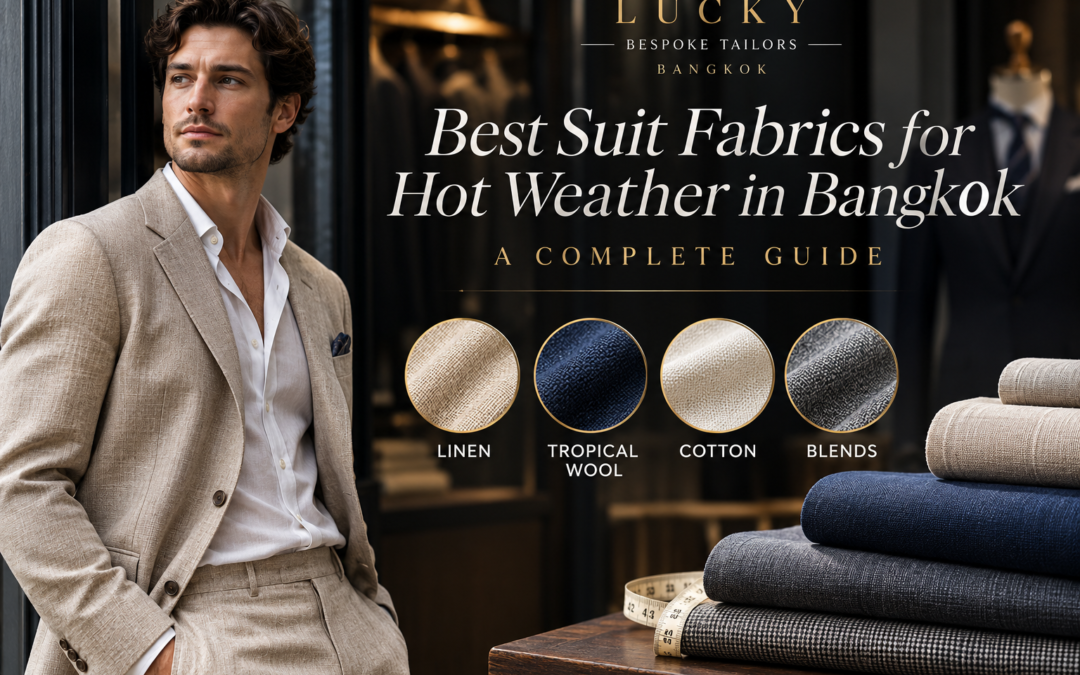
Bangkok is known for its warm temperatures and humid climate, which can make choosing the right suit fabric especially important. Whether you are visiting Thailand for business, attending a wedding, or investing in a tailored suit for everyday wear, the fabric you choose can influence your comfort, appearance, and overall experience.
At Lucky Bespoke Tailors, located on the second floor of MBK Center in Bangkok, customers can explore different tailoring options to find a suit that suits their personal style and intended use.
In this guide, we explore some of the best suit fabrics for hot weather, their advantages and limitations, and what to consider before ordering a custom-tailored suit.
Why Choosing the Best Suit Fabrics for Hot Weather Matters
A well-fitting suit should not only look elegant but also feel comfortable throughout the day.
In Bangkok’s tropical climate, breathability, fabric weight, construction, and moisture management are particularly important. However, lightweight fabric alone does not guarantee comfort. The weave, lining, and structure of a jacket can also make a noticeable difference.
Understanding these factors can help you make a more informed decision when choosing your next tailored suit.
1. Linen Suits: Lightweight and Naturally Breathable
Linen is a popular option for warm-weather tailoring because its fibers allow air to circulate and can help moisture evaporate.
Advantages of Linen
- Breathable and comfortable in warm conditions
- Lightweight options are available
- Relaxed, natural appearance
- Suitable for casual weddings, holidays, and daytime occasions
Things to Consider
Linen wrinkles easily, which is part of its characteristic appearance. Although this relaxed texture appeals to many people, it may not be ideal for every formal business setting.
Best for: Summer weddings, resort events, travel, and smart-casual outfits.
2. Tropical Wool: A Refined Choice for Warm Climates
Many people associate wool with winter clothing, but not all wool fabrics are heavy.
Lightweight tropical wool is designed with a relatively open weave, allowing greater airflow than many densely woven wool fabrics.
Advantages of Tropical Wool
- Can provide good breathability
- Maintains a refined, structured appearance
- Generally offers better wrinkle recovery than linen
- Suitable for professional and formal occasions
Things to Consider
The comfort of wool depends on its weight, weave, and construction. A lightweight tropical wool suit can be suitable for warm climates, while heavier wool fabrics may feel less comfortable outdoors.
Best for: Business suits, formal meetings, professional travel, and elegant evening events.
3. Cotton Suits: Versatile and Comfortable
Cotton is another natural fiber commonly used in casual and semi-formal tailoring.
Depending on the weave and weight, cotton can offer a comfortable option for warm-weather clothing.
Advantages of Cotton
- Available in different weights and textures
- Suitable for relaxed and semi-formal tailoring
- Offers a softer, less formal appearance
- Can be styled for both work and leisure
Things to Consider
Some cotton fabrics wrinkle easily, while tightly woven or heavier cotton may retain more heat than expected.
Best for: Smart-casual suits, daytime events, and relaxed business environments.
4. Linen Blends: Balancing Comfort and Appearance
Linen blends combine linen with other fibers, such as cotton or wool, to achieve different textures and performance characteristics.
For example, a linen-wool blend may offer some of linen’s relaxed appearance while providing additional structure.
Advantages of Linen Blends
- Different combinations of softness and structure
- A variety of textures and finishes
- May wrinkle less than pure linen, depending on the blend
- Versatile for different occasions
Things to Consider
Not every blended fabric behaves the same way. Its comfort and breathability depend on the fiber composition, weave, and overall weight.
Best for: Destination weddings, travel suits, and customers seeking a balance between casual and formal styling.
5. Lightweight Wool Blends: Practical Everyday Tailoring
Wool blends are available in many compositions and can be selected for different priorities, including appearance, durability, and ease of maintenance.
Some lightweight blends are suitable for everyday business wear, especially when combined with an appropriate jacket construction.
However, synthetic fiber content does not automatically make a fabric cooler or more breathable. Each fabric should be evaluated individually.
Best for: Everyday professional clothing and customers seeking a balance of appearance and practicality.
How to Choose the Right Suit Fabric for Bangkok
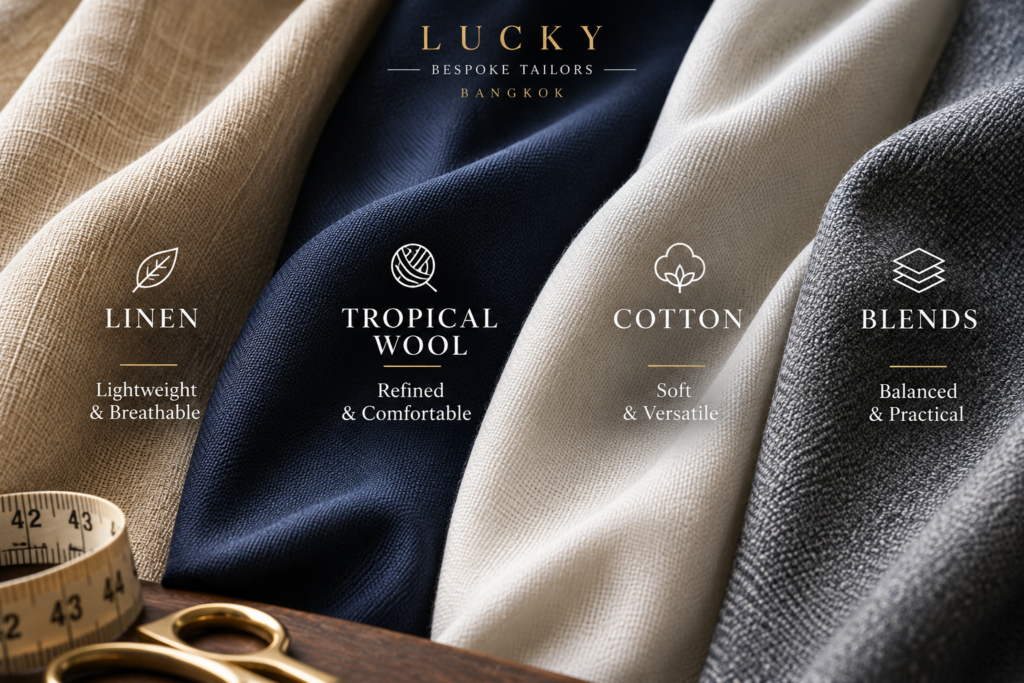
Comparing linen, tropical wool, cotton, and blended fabrics for warm-weather tailoring.
Choosing the best suit fabrics for hot weather involves more than selecting a particular fiber.
Consider the following factors before making your decision.
For more information about Thailand’s climate and travel conditions, visit the official Tourism Authority of Thailand website.
Best Suit Fabrics for Hot Weather: Weight and Weave
Lightweight fabrics can reduce bulk, while an open weave may improve airflow. Two fabrics made from the same fiber can feel very different depending on how they are woven.
Jacket Construction and Lining
A heavily structured jacket with a full lining may feel warmer than a lighter construction. Discussing lining and construction options with your tailor can help you choose a suit suited to your needs.
Occasion and Dress Code
A linen suit may be excellent for an outdoor celebration, while tropical wool may be more appropriate for a formal business meeting.
The best choice depends on where and how you plan to wear the suit.
Fit and Freedom of Movement
Even a breathable fabric may feel uncomfortable if the suit is excessively tight.
Proper measurements, balanced proportions, and suitable ease of movement all contribute to a comfortable finished garment.
To understand how fit influences the finished result, read our guide to The Art of Bespoke Tailoring: Why a Perfect Fit Matters.
Best Fabrics for Wedding Suits in Thailand
For weddings in Bangkok or other warm destinations, the ideal fabric depends on the venue, time of day, and dress code.
For outdoor daytime weddings, linen or certain lightweight blends may offer a relaxed and comfortable appearance.
For formal ceremonies and evening receptions, lightweight tropical wool can provide a more structured and polished look.
Couples and wedding guests should also consider whether the event will take place outdoors, indoors, or in an air-conditioned venue.
For additional styling guidance, explore our article Wedding Suits & Tuxedos in Bangkok: A Complete Guide for Grooms.
Choosing a Tailored Suit at Lucky Bespoke Tailors
A tailored suit should reflect your personal preferences, lifestyle, and intended occasion.
When choosing fabric, it is useful to discuss how often you will wear the suit, whether you expect to spend time outdoors, and whether you prefer a structured or relaxed silhouette.
At Lucky Bespoke Tailors in MBK Center, Bangkok, customers can discuss their tailoring requirements and explore suitable options for business clothing, wedding attire, and other occasions.
Final Thoughts
There is no single fabric that is perfect for every person or occasion.
Linen offers a relaxed and breathable option, tropical wool can provide an elegant formal appearance, and cotton or blended fabrics may suit different styling and practical needs.
When selecting the best suit fabrics for hot weather, consider the fiber, weight, weave, construction, and fit together rather than relying on fabric type alone.
Choosing thoughtfully can help you create a tailored suit that looks appropriate for the occasion while remaining comfortable in Bangkok’s warm climate.
Wedding Suits & Tuxedos in Bangkok: A Complete Guide for Grooms
How Long Does It Take to Make a Tailored Suit in Bangkok